- The Indoor Air Paradox: Why Your Home Is Worse Than the Street
- Metro Manila: Among the World's Most Polluted Cities
- Volcanic Threats: Taal, Pinatubo, and the Ashfall Reality
- Landfill & Industrial Fires: The Navotas Wake-Up Call
- Rainy & Typhoon Season: The Hidden Disease Spreader
- Local Weather: Why Climate Compounds the Problem
- How Airdog Addresses Every Filipino Air Threat
- Why Businesses Need Air Purifiers Too
- Long-Term Health Benefits: An Investment, Not an Expense
- Making the Right Choice for Your Filipino Family
The Indoor Air Paradox: Why Your Home Is Worse Than the Street
Most Filipinos assume the air inside their home is cleaner than the polluted streets of Manila. The reality is the opposite. The U.S. Environmental Protection Agency and the World Health Organization both report that indoor air is typically 2 to 5 times more polluted than outdoor air — and in the Philippines, where homes are tightly sealed against tropical heat and air-conditioned for hours each day, that gap can be even wider.
Why? Outdoor pollutants get diluted by wind, broken down by sunlight, and dispersed into a vast volume of air. Indoors, pollutants accumulate. Every cooking session, every cleaning spray, every closed window, every air-conditioned afternoon traps and concentrates contaminants where you and your family breathe them in for hours on end.
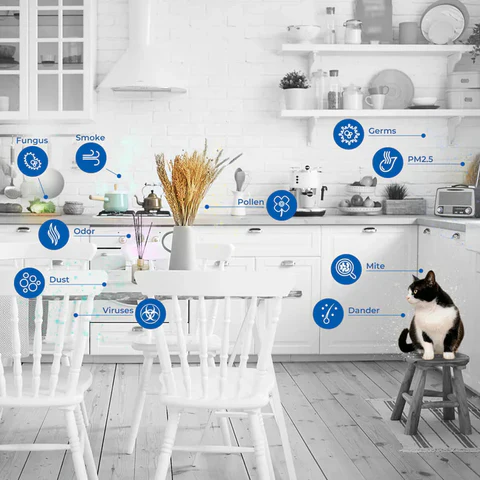
Inside a typical Filipino home, the air contains a relentless cocktail of contaminants: PM2.5 from kitchen cooking and traffic infiltration, mold spores that thrive in tropical humidity, pet dander and dust mites from sealed bedrooms, volatile organic compounds (VOCs) from cleaning products and new furniture, and airborne viruses and bacteria from family members and visitors. Without active filtration, all of these stay airborne — and stay in your lungs.
The WHO ranks indoor air pollution as one of the leading global environmental health risks, contributing to millions of premature deaths each year worldwide. In the Philippines, where over half the population lives in dense urban areas with poor ventilation, this is not an abstract statistic — it's a daily exposure.
Metro Manila: Among the World's Most Polluted Cities
Metro Manila is one of the most densely populated metropolitan regions on Earth — and its air quality reflects that pressure. According to IQAir's annual World Air Quality Reports, the Philippines and especially the National Capital Region consistently rank among Southeast Asia's most polluted urban environments.
What's in Metro Manila's Air?
The World Health Organization recommends an annual average PM2.5 concentration below 5 µg/m³ for safe long-term exposure. Metro Manila routinely averages several times that level, with daily peaks during dry season and rush hour climbing far higher. The major sources:
Vehicle Emissions
Millions of registered vehicles — cars, jeepneys, buses, motorcycles — fill Metro Manila's roads daily. Diesel exhaust is a major source of PM2.5, NOx, and known carcinogens.
Construction & Demolition
Constant building activity across BGC, Ortigas, Makati, and QC releases concrete dust, silica, and aerosolized particles that linger for blocks.
Industrial Activity
Surrounding industrial zones in Caloocan, Valenzuela, Pasig, and Laguna emit particulates and SO₂ that drift across Metro Manila on prevailing winds.
Open Burning
Despite local ordinances, open burning of garbage and yard waste remains common — especially in informal settlements — releasing concentrated smoke into residential areas.
Limited Green Cover
Metro Manila has one of the lowest urban tree-cover percentages of any major Southeast Asian capital — meaning fewer natural air filters and less particulate trapping.
Geographic Bowl
The Manila Bay basin and surrounding mountain ranges trap pollution over the city, especially during low-wind periods — concentrating everything residents breathe.
"On a typical Metro Manila weekday, the PM2.5 level outside a Makati office can be 3 to 5 times the WHO safe limit — and indoors it's often higher due to recirculation."
— Based on IQAir Philippines real-time monitoring dataVolcanic Threats: Taal, Pinatubo, and the Ashfall Reality
Few Filipinos can forget the morning of January 12, 2020, when Taal Volcano erupted and blanketed Batangas, Cavite, parts of Laguna, and southern Metro Manila in a thick layer of volcanic ash. Schools closed. Flights were cancelled. Families wore masks indoors. Hospitals reported a sharp surge in respiratory complaints.
That eruption was a reminder of a permanent reality: the Philippines is one of the most volcanically active countries on Earth. With 24 active volcanoes — including Taal, Mayon, Bulusan, Kanlaon, and Pinatubo — significant ashfall events are not rare disasters but recurring features of Filipino life.
Volcanic ash is not just dirt. It is composed of microscopic shards of silicate glass and pulverized rock — sharp, abrasive, and chemically reactive. When inhaled, these particles can lacerate lung tissue, trigger asthma attacks, worsen COPD, and cause silicosis with prolonged exposure. Children, the elderly, and people with cardiovascular conditions are at highest risk.
The Pinatubo Precedent
The June 1991 eruption of Mt. Pinatubo was the second-largest volcanic eruption of the 20th century. It ejected an estimated 10 cubic kilometers of ash and pumice, blanketed multiple Luzon provinces, and affected global climate for years. Older Filipinos remember the months of breathing ash-laden air. Younger Filipinos may not realize that a Pinatubo-scale event could happen again — Mt. Mayon, Mt. Bulusan, Mt. Kanlaon, and Taal are all potential candidates, and PHIVOLCS regularly raises alert levels.
During an ashfall event, indoor air quality collapses within hours as particles infiltrate through windows, vents, and AC intakes. A standard surgical mask offers minimal protection. A certified air purifier — running continuously — is the most reliable defense for protecting children, elderly relatives, and people with respiratory conditions when staying indoors is the only safe option.
Landfill & Industrial Fires: The Navotas Wake-Up Call
In recent years, Filipinos have witnessed increasingly frequent and severe fires at landfills, dumpsites, warehouses, and informal settlements. The recurring blazes at the Navotas dumpsite are among the most visible — sending choking, toxic smoke across Metro Manila for days at a time, and triggering health advisories that warn residents to stay indoors.
What's burning in these fires isn't just trash. Modern household and commercial waste contains plastics, electronics, treated wood, batteries, foam, and synthetic fabrics. When these burn, they release a hazardous brew of:
Dioxins & Furans
Among the most toxic compounds known to science. Linked to cancer, reproductive harm, and immune system damage. Released when plastics and chlorinated materials burn.
Lead, Mercury, Cadmium
Released from burning batteries, electronics, and treated wood. Cause neurological damage, developmental issues in children, and kidney problems.
PM2.5 & PM10
Massive concentrations of fine particulates that bypass nose hairs and reach deep into lung tissue. Trigger asthma, bronchitis, and cardiovascular events.
VOCs & Carbon Monoxide
Volatile organic compounds and CO from incomplete combustion. Cause headaches, dizziness, throat irritation, and long-term liver/kidney effects.
The smoke from a single major dumpsite fire can travel 10–30 kilometers on Metro Manila's prevailing winds, affecting Caloocan, Valenzuela, Quezon City, Manila, Pasay, and beyond. By the time the fire is contained, the toxic load has already infiltrated thousands of homes and offices through windows, AC vents, and door gaps.
Beyond Navotas, the Philippines also faces:
- Recurring slum and informal settlement fires in dense urban areas
- Warehouse and factory fires in Bulacan, Cavite, and Laguna industrial zones
- Seasonal agricultural burning in surrounding provinces (rice straw, sugarcane fields)
- Forest fires in the Sierra Madre and Cordillera regions during dry season
During major fire events, official advisories typically tell residents to "stay indoors and close all windows." But without active air filtration, that's only half a solution — smoke still infiltrates through gaps, and existing indoor pollutants concentrate further. A certified air purifier turns "stay indoors" from a holding pattern into actual protection.
Rainy & Typhoon Season: The Hidden Disease Spreader
Every Filipino family knows the rhythm: when the rains start in June, so does flu season. Schools see waves of absences. Workplaces empty out. Hospitals fill up. We chalk it up to "weather," but the real driver is indoor air quality collapsing precisely when we spend the most time indoors.
Why Filipino Households Get Sick More Often During Rainy Season
Closed Windows = Recirculated Air
When typhoons and monsoon rains hit, families close all windows. AC units run constantly. The same air recirculates through the household for hours and days, concentrating any virus, bacteria, or allergen one person brings home.
Humidity Spikes Above 80%
Persistent rain pushes indoor humidity past 80%. This is the optimal range for mold growth, dust mite reproduction, and bacterial replication on surfaces, fabrics, and HVAC systems.
Mold Releases Spores Into the Air
Mold colonies — often hidden in air-conditioner coils, behind furniture, in bathroom corners, and on damp walls — release thousands of microscopic spores into the air. Inhaling them triggers allergies, asthma flare-ups, and sinus infections.
Viruses Stay Airborne Longer
Cold, flu, RSV, and COVID-19 viruses persist longer in cool, humid, recirculated air than in warm dry air. One sick family member can infect everyone in the household within days.
Floods & Water Damage Add Bacteria
Typhoon flooding leaves wet carpets, water-damaged walls, and contaminated surfaces. Bacteria from floodwater (including E. coli and Leptospira) become aerosolized as surfaces dry, lingering in the air for weeks.
The Diseases That Spread Faster
- Influenza (flu) — Filipino flu peaks consistently coincide with the rainy season
- RSV (respiratory syncytial virus) — Especially dangerous for infants and toddlers
- Common cold and rhinovirus — Pass through families in days
- Asthma exacerbations — Triggered by mold spores and dust mite proliferation
- Allergic rhinitis & sinusitis — Worse during high-humidity months
- Bronchitis and pneumonia — Particularly serious in elderly Filipinos
- Skin and respiratory infections from post-flood mold and bacteria
"During typhoon season, my whole family used to take turns getting sick — every two weeks, someone new. Since we got the Airdog running 24/7 in the living room, we've broken that cycle."
— Common testimonial pattern from Filipino Airdog ownersLocal Weather: Why Climate Compounds the Problem
The Philippines' tropical climate is beautiful — but it's also a perfect storm for poor indoor air quality year-round. Three weather factors stack against Filipino households:
Year-Round Heat & Humidity
With average temperatures in the high 20s to mid-30s Celsius and humidity often above 70%, Filipinos run air conditioners and ceiling fans nearly continuously. AC units that aren't regularly serviced become active sources of indoor pollution: mold colonizes the cooling coils, dust accumulates in filters, and the system blows contaminated air directly into living spaces.
Dry Season Dust & Smog Concentration
The dry season (December through May) brings less rainfall to wash pollutants out of the air. Manila's PM2.5 and ozone levels typically peak from March to May, when traffic emissions accumulate without rain to clear them. Dry-season fires (forest, agricultural, dumpsite) also peak during these months.
Monsoon Reversals & Stagnant Air
During the transition between Habagat (southwest monsoon) and Amihan (northeast monsoon), wind patterns can stagnate over Luzon — trapping pollution over Metro Manila for days at a time. These periods see the worst measurable air quality of the year.
Approximate ranges based on IQAir Philippines and DENR Air Quality monitoring data. Actual values vary by station and conditions.
How Airdog Addresses Every Filipino Air Threat
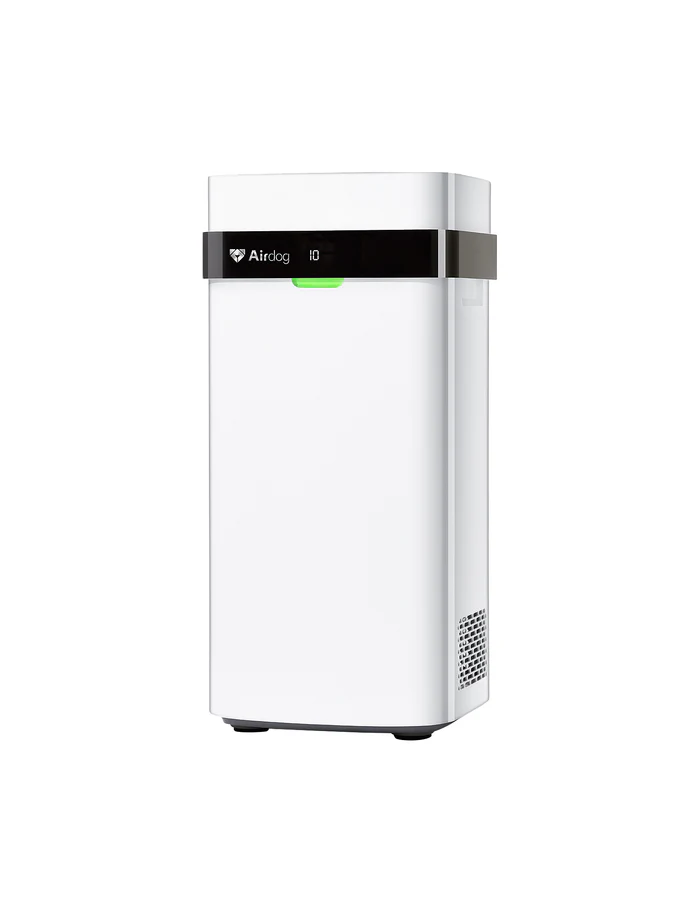
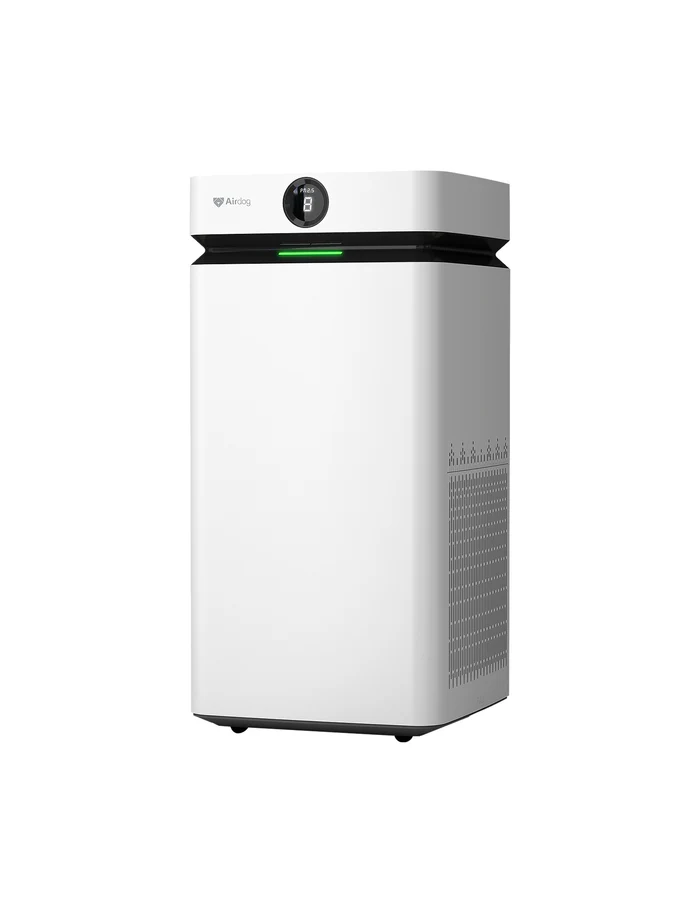
Airdog is engineered specifically to neutralize the airborne threats Filipinos face every day. While most air purifier brands sold in the Philippines rely on disposable HEPA filters that capture only down to 0.3 microns — and require ₱1,000–₱3,000+ in annual filter replacements — Airdog uses patented Two-Pole Active (TPA®) electrostatic technology with washable, reusable collecting plates.
Why TPA® Beats HEPA for Philippine Conditions
- Captures particles down to 0.0146 microns — 20× finer than HEPA H13. This catches volcanic ash particles, viruses, ultrafine PM2.5, and combustion smoke that pass right through HEPA filters.
- Independently lab-tested for 99.9% virus removal by Nelson Labs — critical during flu season and typhoon-season disease spread.
- U.S. FDA international clearance (K211507) — the only air purifier brand in the Philippines with medical-grade certification.
- CARB ozone-free certified — verified to emit less than 0.015 ppm ozone, well below the strictest global safety thresholds. Safe for children, elderly, and pets.
- Washable, reusable filters — no need to source replacement HEPA filters during typhoon season when supplies run low. Just rinse, dry, and reinstall.
- Active virus & bacteria destruction — TPA® technology doesn't just trap microorganisms, it electrostatically inactivates them.
What Airdog Removes from Filipino Indoor Air
Volcanic Ash & Smoke
Captures ash particles down to 0.0146 microns — far smaller than what surgical masks or HEPA filters catch. Critical during Taal eruptions and Navotas dumpsite fires.
PM2.5 & Traffic Emissions
Removes the diesel soot, brake dust, and combustion byproducts that infiltrate Metro Manila homes from outside roads.
Viruses & Bacteria
Inactivates 99.9% of airborne viruses (Nelson Labs verified) including flu, RSV, common cold, and SARS-CoV-2 surrogates. Essential during rainy season.
Mold Spores
Captures the fungal spores that proliferate in Philippine humidity and trigger asthma, allergies, and respiratory irritation.
Pet Dander & Fur
The Airdog P50 specifically removes 98%+ pet dander and 99%+ pet odors — verified for cat and dog households.
VOCs & Cooking Fumes
Activated carbon stage adsorbs volatile organic compounds from cleaning products, new furniture, paint, and Filipino cooking (especially fried and grilled dishes).