Why You Can't Just Wash a HEPA Filter
It seems like an obvious solution: if the filter is dirty, rinse it. But HEPA filters don't work that way. Here's why.
A HEPA filter is a dense mat of borosilicate glass fibers, randomly arranged and pressed together. Particles are trapped not only by direct interception, but by three separate mechanical mechanisms — inertial impaction, diffusion, and electrostatic attraction. The integrity of the fiber structure is critical to all three.
When you rinse a HEPA filter with water, the water molecules penetrate between the fibers. Surface tension rearranges and compresses the fiber structure as the water dries. The result: gaps open up in the media, the fiber-to-fiber spacing becomes irregular, and the filter's ability to trap particles drops dramatically. Independent tests have shown that a washed HEPA filter can drop from 99.97% filtration efficiency to below 50% — making it functionally useless.
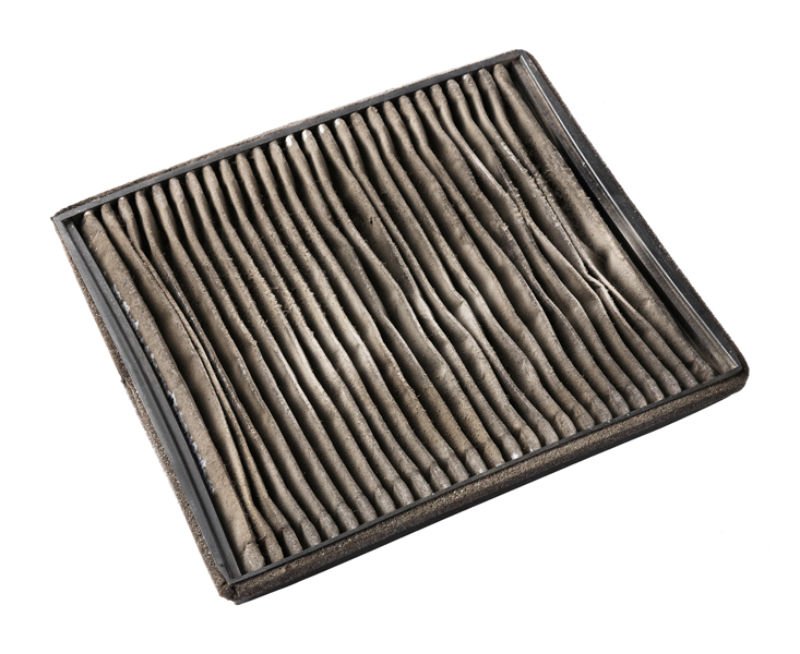
- ✗Cannot be washed — water destroys the fiber matrix
- ✗Must be replaced every 6–12 months regardless
- ✗Costs ₱1,299–₱3,500 per replacement in the Philippines
- ✗Performance degrades gradually as fibers clog with use
- ✗Filter disposal creates ongoing waste
- ✗Replacement filters can go out of stock or be discontinued
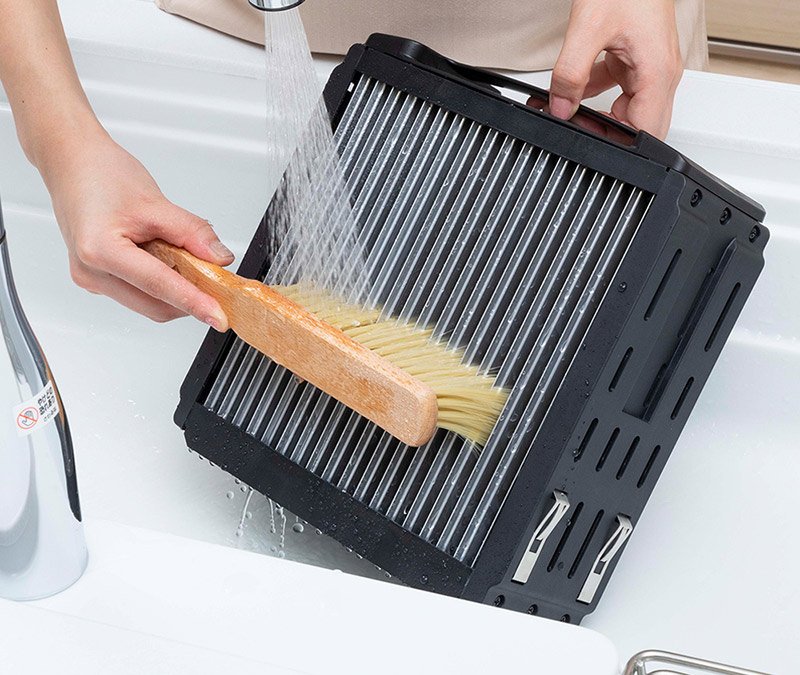
- ✓Designed to be washed — rinsing with water fully restores performance
- ✓Never needs replacement — lasts the lifetime of the unit
- ✓₱0 replacement cost, every year
- ✓Returns to full efficiency after each wash
- ✓Zero consumable waste — better for the environment
- ✓No supply chain dependency — plates are always available
Airdog's TPA® (Two-Pole Active) technology works completely differently. Instead of trapping particles in a fiber mat, TPA® uses stainless steel electrostatic collecting plates. Particles are first given a charge as they pass through an ionization zone, then pulled onto the oppositely charged collector plates — like a magnet. The plates don't degrade. Washing them with water simply removes the accumulated particles, and the plates restore to full electrical performance. No fiber, no degradation, no replacement.